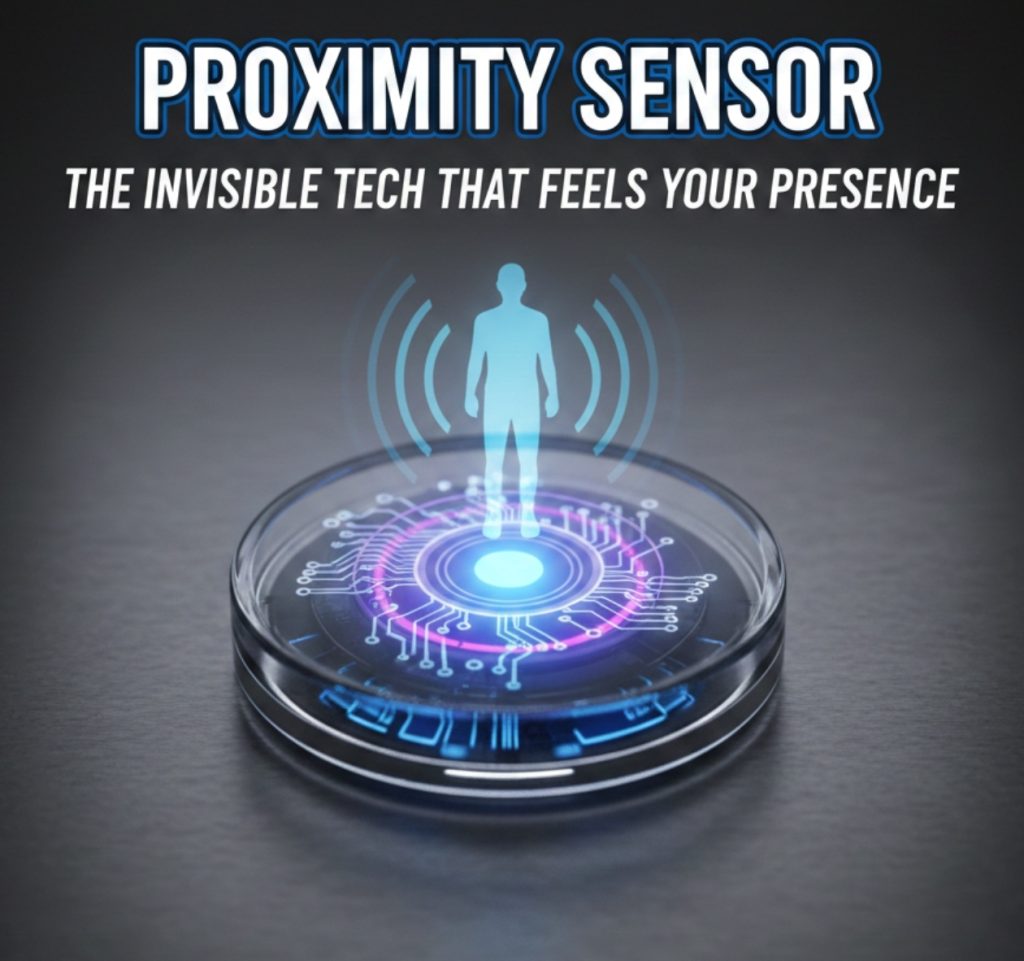
In our smart, connected world, there’s a tiny technology quietly working behind the scenes—the proximity sensor. Though invisible to the naked eye, it enables devices to “sense” your presence without physical contact, making interactions smarter, safer, and more seamless. From your smartphone to your car, and even your home appliances, proximity sensors are everywhere.
What is a Proximity Sensor?
A proximity sensor is a device that detects the presence or movement of nearby objects without touching them. It can measure distance, detect motion, or even recognize the type of object in front of it. In essence, it lets machines “feel” their environment, opening doors to automation and touchless convenience.
A Quick History & Evolution
Proximity sensing technology started decades ago in industrial settings. Early sensors were large, mechanical, and mostly used to detect metal parts on assembly lines. As electronics advanced, sensors became smaller, cheaper, and more versatile:
- 1970s–1980s: Inductive and capacitive sensors used in factories.
- 1990s: Infrared (IR) sensors started appearing in consumer electronics.
- 2000s–Present: Miniaturized sensors integrated into smartphones, cars, and IoT devices, combined with AI for smarter automation.
How Proximity Sensors Work
Different types of sensors detect objects in unique ways:
- Infrared (IR) Sensors
- Emit infrared light and measure reflections.
- Used in smartphones to turn off screens during calls and in gesture-based devices.
- Ultrasonic Sensors
- Emit sound waves and calculate distance by measuring echoes.
- Found in car parking assistance and drones.
- Capacitive Sensors
- Detect changes in the electrical field caused by nearby objects.
- Common in touchless faucets, smart switches, and security devices.
- Inductive Sensors
- Generate a magnetic field and detect metal objects nearby.
- Widely used in industrial machinery and robotics.
Advantages of Proximity Sensors
Proximity sensors bring a lot to the table:
- Touchless Convenience: Automatically detects presence—perfect for phones, lights, or faucets.
- Safety: Prevents accidents in cars, industrial machinery, and robots.
- Automation & Efficiency: Enables smart home systems and industrial automation.
- Durability: No physical contact means less wear and tear.
Limitations & Challenges
While amazing, proximity sensors aren’t perfect:
- Range Limitations: Some sensors only detect nearby objects.
- Environmental Interference: Dust, light, or moisture can affect accuracy.
- Cost: Advanced sensors can be expensive, especially in large-scale applications.
Real-Life Applications
Proximity sensors are everywhere, often unnoticed:
- Smartphones: Screen auto-off during calls, gesture control, and face detection.
- Automotive: Collision avoidance, parking assist, adaptive cruise control.
- Home Automation: Touchless lights, faucets, security alarms.
- Wearables & Fitness Devices: Detecting movement or presence of objects.
- Gaming & VR: Hand gestures or motion detection for immersive experiences.
- Industrial Automation: Detecting parts, controlling machines, and preventing accidents.
Integration with IoT & AI
Modern proximity sensors are no longer standalone—they’re integrated into IoT systems and combined with AI for smarter decisions:
- Smart homes adjust lighting or climate based on presence.
- Robots navigate complex environments safely.
- Retail stores offer personalized experiences without touching anything.
DIY Projects & Experimentation
Tech enthusiasts can explore proximity sensors with simple DIY projects using Arduino or Raspberry Pi:
- Build a touchless hand sanitizer dispenser.
- Create a motion-activated light for your room.
- Design a parking assistant system for toy cars.
These projects are great for learning electronics, coding, and automation.
Future Trends & Innovations
The future of proximity sensors is exciting:
- Healthcare: Monitor patient movements without wearables.
- Smart Cities: Traffic management and public safety using sensors.
- 3D Gesture Recognition: Touchless interfaces for more devices.
- Energy Efficiency: Smarter, low-power sensors for wearables and IoT devices.
Fun Facts
- Some toothbrushes and water taps know when you’re near, thanks to tiny proximity sensors.
- Luxury cars hide sensors behind mirrors and bumpers for a sleek look.
- Gesture-controlled devices rely on multiple sensors working together, giving you that “magic” experience.
Final Thoughts
Though often invisible, proximity sensors are the silent heroes of the tech world. They make our devices smarter, safer, and more intuitive. From preventing phone mis-touches to saving lives in industrial and automotive settings, proximity sensors are quietly revolutionizing how humans interact with machines.
Next time your device reacts without a touch, remember—it’s not magic, it’s proximity sensing technology at work.