
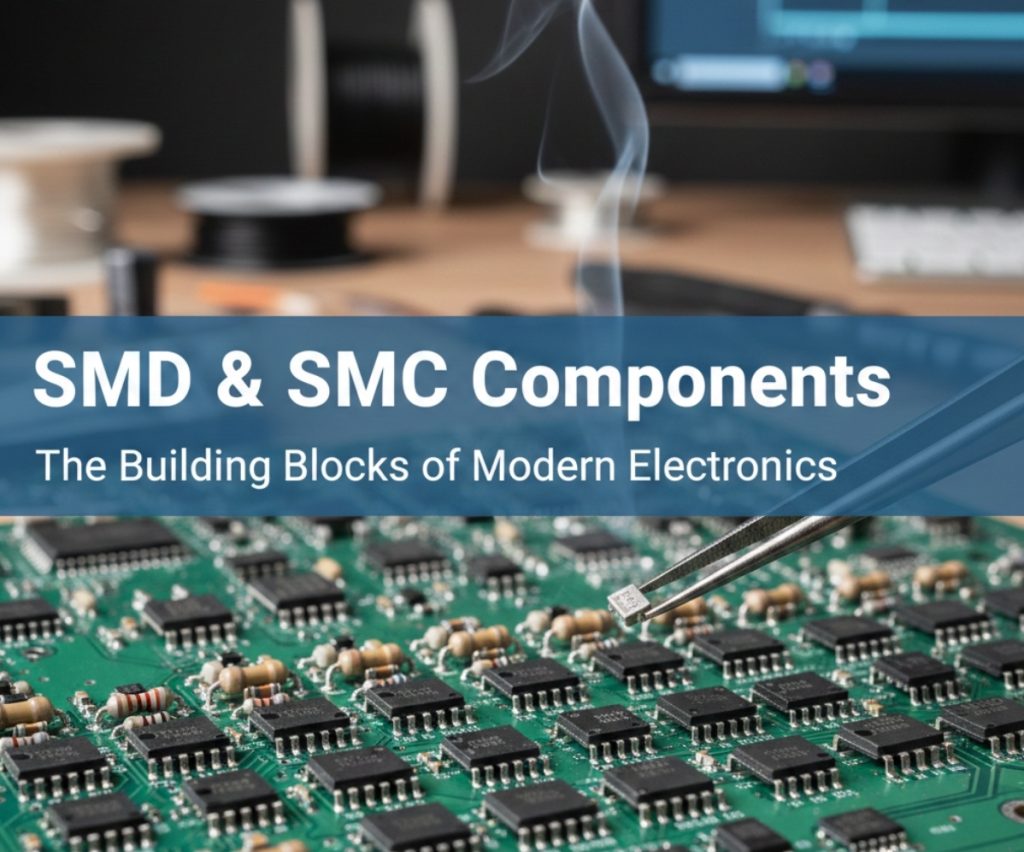
In the era of miniaturized electronics, Surface Mounted Devices (SMD) and Surface Mounted Components (SMC) are the unsung heroes making devices smaller, faster, and more reliable. From smartphones and laptops to IoT gadgets and wearable tech, SMD/SMC components are everywhere, powering the electronics that define our modern life.
What Are SMD & SMC Components?
- SMD (Surface Mounted Device): An electronic component designed to be mounted directly onto the surface of a printed circuit board (PCB), rather than using through-hole connections.
- SMC (Surface Mounted Component): Another term for SMD, sometimes used interchangeably.
Both enable compact, lightweight, and high-performance designs, which is why they dominate modern electronics manufacturing.
How Do SMD Components Work?
Traditional electronic components (like resistors or capacitors) were often connected through holes in PCBs using wires. SMD/SMC components are smaller and flat, soldered directly onto the PCB surface, allowing:
- Higher component density—more functionality in a smaller space.
- Automated assembly—machines can place thousands of components per hour.
- Better performance—shorter electrical paths reduce resistance and inductance.
Types of SMD/SMC Components
- Resistors
- Control current flow and divide voltage.
- SMD resistors are tiny, often just a few millimeters in size.
- Capacitors
- Store and release electrical energy.
- Types include ceramic, tantalum, and electrolytic SMD capacitors.
- Diodes
- Allow current to flow in one direction, used in rectification and protection circuits.
- SMD diodes are common in power management and signal processing.
- Transistors
- Act as amplifiers or switches.
- SMD transistors enable high-speed operation in tiny circuits.
- Inductors & Coils
- Store energy in a magnetic field and filter signals.
- Surface-mounted inductors are used in power supplies and RF circuits.
- Integrated Circuits (ICs)
- Complex chips combining multiple electronic functions.
- SMD ICs make smartphones, laptops, and microcontrollers possible.
- LEDs & Displays
- Provide indicators or display information.
- SMD LEDs are extremely bright and energy-efficient.
Advantages of SMD/SMC Components
- Miniaturization: Allows for compact devices and portable electronics.
- Automation-Friendly: Perfect for mass production using pick-and-place machines.
- Higher Reliability: Less prone to mechanical failure than through-hole components.
- Better Performance: Shorter paths reduce signal interference and parasitic effects.
- Cost-Efficient: Reduces material usage and PCB size, saving money in large-scale production.
Applications of SMD/SMC Components
- Smartphones & Tablets: High-density circuits for compact designs.
- Wearables: Tiny components fit into watches, fitness trackers, and health devices.
- IoT Devices: Sensors, controllers, and microchips rely heavily on SMD components.
- Computers & Laptops: Memory modules, motherboards, and graphics cards.
- Automobiles: Advanced electronics, from infotainment systems to safety sensors.
- Consumer Electronics: TVs, cameras, game consoles, and smart appliances.
Tips for Working with SMD Components
- Use fine-tipped soldering tools or reflow ovens for assembly.
- Handle with care—tiny components are easy to lose or damage.
- Pay attention to polarity, especially for diodes, LEDs, and capacitors.
- Consider using magnification or microscopes for inspection.
Fun Facts
- Some SMD resistors are smaller than a grain of rice.
- SMD LEDs can emit more light per watt than traditional through-hole LEDs.
- Modern smartphones may contain thousands of SMD components, making the device a marvel of miniaturization.
Final Thoughts
SMD and SMC components are the backbone of modern electronics. By enabling smaller, faster, and more reliable circuits, they’ve revolutionized everything from phones and laptops to smart home gadgets and industrial machines.
The next time you tap your smartphone or turn on your laptop, remember—millions of tiny surface-mounted components are working silently to make it all possible.
Do you want me to do that?