
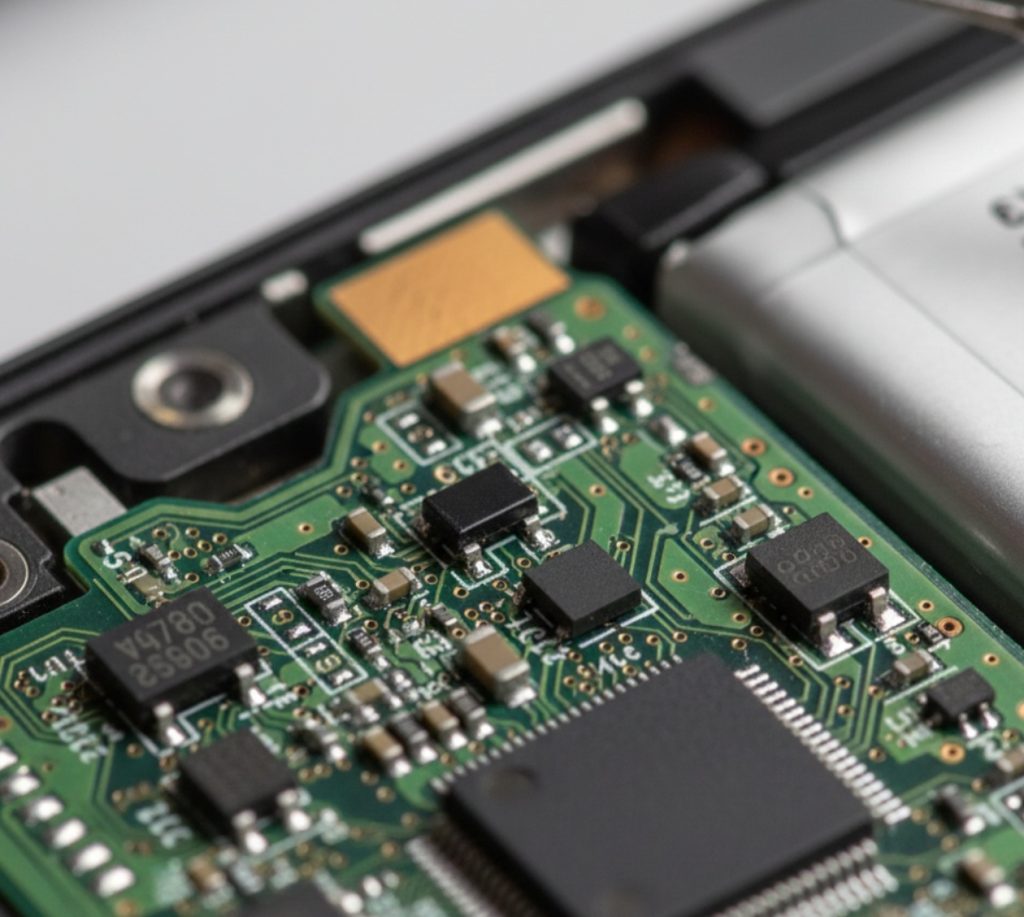
A resistor is a fundamental electronic component that limits current or reduces voltage in a circuit. Think of it as a traffic controller for electrons, preventing damage to sensitive components by regulating how much current flows.
Key Features of a Resistor
- Color: Usually black (but can vary; color bands indicate resistance)
- Polarity: None (can be connected in any direction)
- Terminals: 2
- Symbol: R
- Unit: Ohms (Ω)
Types of Resistors
1. Fixed Resistor
- Resistance value is constant and cannot be adjusted.
- Used in most circuits for standard voltage or current limiting.
2. Variable Resistor
- Resistance can be adjusted manually.
- Examples:
- Potentiometer: Often used as volume knobs or adjustable controls.
- Rheostat: Used to adjust current in high-power circuits.
Specialized Types of Resistors
- Chip / SMD Resistor
- Tiny, surface-mounted resistors for compact electronic boards.
- Thermistor (Temperature-Dependent Resistor)
- Resistance changes with temperature.
- NTC = Resistance decreases with heat.
- PTC = Resistance increases with heat.
- Used in temperature sensors and protection circuits.
- LDR (Light Dependent Resistor)
- Resistance changes based on light intensity.
- Used in automatic streetlights, brightness sensors.
- Shunt Resistor
- Low-value resistor used to measure current by detecting voltage drop.
- Common in power meters and battery monitors.
- Fuseable Resistor
- Acts as a resistor and a fuse.
- Burns out safely to protect the circuit in case of overcurrent.
How Resistors Protect Circuits
- Limits current: Prevents sensitive components from overcurrent damage.
- Reduces voltage: Divides voltage for specific parts of a circuit.
- Signal control: Helps adjust signals in audio, sensor, and communication circuits.
Fun Facts
- Color bands on resistors indicate resistance value, tolerance, and sometimes reliability.
- Resistors are one of the oldest electronic components, still crucial despite modern electronics.
- SMD resistors are so tiny that hundreds can fit on a single chip.
Quick Reference
| Feature / Type | Description | Use Case |
|---|---|---|
| Fixed Resistor | Constant resistance | Voltage/current limiting |
| Variable Resistor | Adjustable resistance | Volume control, dimmers |
| Thermistor | Temperature-sensitive | Temp sensors, protection circuits |
| LDR | Light-sensitive | Auto lights, brightness sensing |
| Shunt Resistor | Measures current | Power meters, battery monitoring |
| Fuseable Resistor | Burns out under overcurrent | Circuit protection |
| Chip / SMD Resistor | Miniature, surface-mounted | Modern electronics boards |
.