
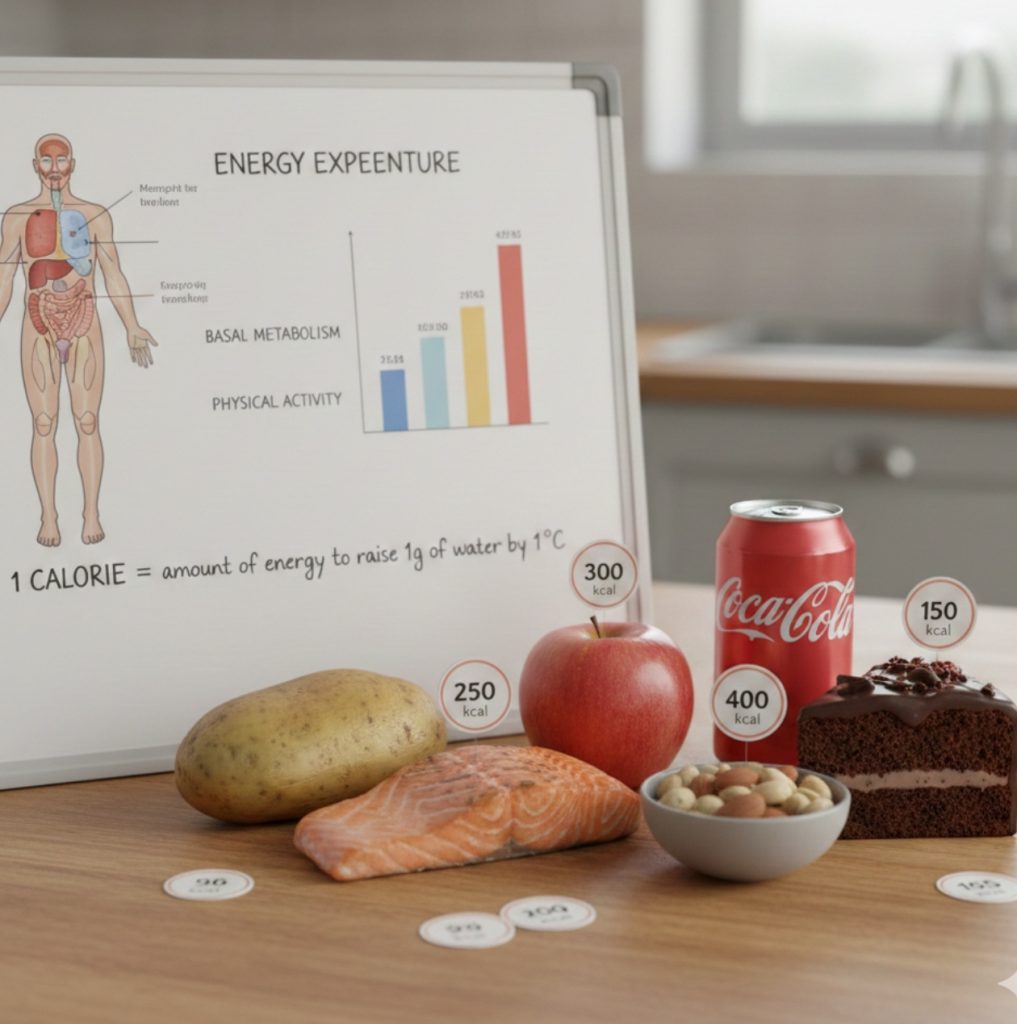
Calories are everywhere — on food labels, in fitness apps, and in every health debate you’ve ever overheard. But what are they, really, and why do they matter? Let’s decode the science behind calories and how they affect your body.
What is a Calorie?
A calorie is simply a unit of energy. Think of it as the fuel your body burns to keep everything running — from blinking your eyes to running a marathon. Technically, one calorie (or more accurately, one kilocalorie, kcal) is the amount of energy needed to raise the temperature of 1 kilogram of water by 1°C. But don’t get stuck on the science jargon — just know that calories are energy, plain and simple.
Where Do Calories Come From?
Calories come from the three main macronutrients in food:
- Carbohydrates – 4 kcal per gram
Your body’s go-to quick energy source. Found in rice, bread, fruits, and sugars. - Proteins – 4 kcal per gram
Building blocks for muscles, enzymes, and tissues. Found in meat, eggs, dairy, legumes. - Fats – 9 kcal per gram
More energy-dense, slow-burning fuel. Found in oils, nuts, butter, and fatty fish.
(Bonus: Alcohol has 7 kcal per gram — tasty but not nutritious.)
Calories In vs. Calories Out
Your body is like a bank account:
- Calories In = the food and drinks you consume
- Calories Out = the energy you spend through metabolism, movement, and daily activities
If you consume more calories than you burn, your body stores the excess as fat. If you consume fewer calories than you burn, your body burns stored fat for energy. This is why calories are the core concept behind weight management.
Quality Over Quantity
Not all calories are created equal. 200 kcal of candy affects your body very differently than 200 kcal of chicken, broccoli, and avocado. Nutrient-rich foods fuel your body efficiently, support muscle growth, and stabilize energy, whereas empty-calorie foods may spike blood sugar, lead to cravings, and not satisfy hunger.
How Many Calories Do You Need?
Calorie needs vary depending on age, gender, activity level, and metabolism. Rough averages:
- Sedentary women: ~1,800–2,000 kcal/day
- Active women: ~2,000–2,400 kcal/day
- Sedentary men: ~2,200–2,400 kcal/day
- Active men: ~2,400–3,000 kcal/day
The key is to balance your energy intake with your lifestyle goals, whether that’s building muscle, losing fat, or just maintaining health.
Fun Fact: Your Body is Always Burning Calories
Even when you’re binge-watching Netflix, your body burns calories just to breathe, digest food, and keep your heart beating. This baseline energy use is called your Basal Metabolic Rate (BMR).
Final Thoughts
Calories aren’t the enemy. They’re a measure of energy that keeps you alive, moving, and thinking. Understanding calories helps you make smarter choices about what you eat and how you fuel your body. But remember: it’s not just about counting calories — it’s about eating wisely, staying active, and enjoying the process.