
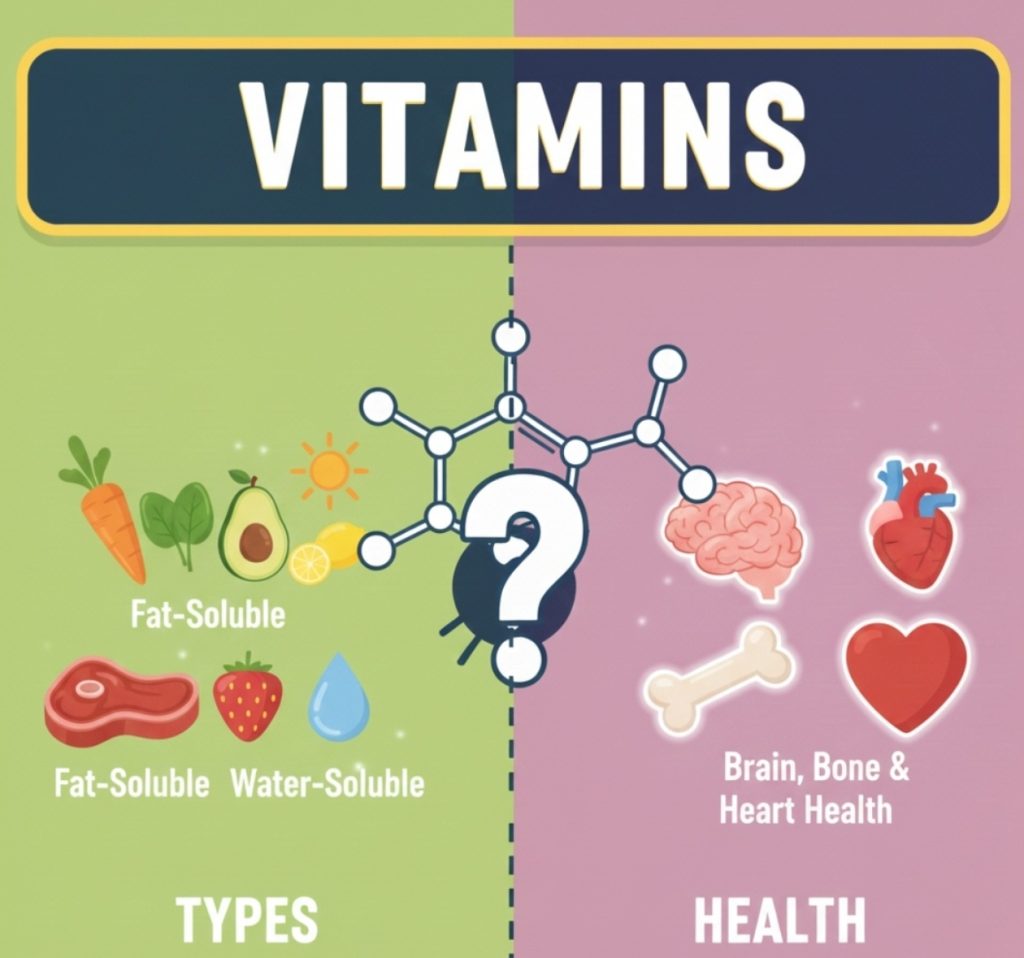
Vitamins are essential nutrients your body needs in small amounts to function properly. Unlike carbs, proteins, or fats, vitamins don’t provide energy, but they play a huge role in keeping your body alive, strong, and healthy.
Types of Vitamins
Vitamins are divided into two main groups:
1. Fat-Soluble Vitamins
Stored in your fat and liver, so you don’t need them every day.
- Vitamin A: Vision, skin, immune system. Sources: carrots, sweet potatoes, spinach.
- Vitamin D: Bone health, immune support. Sources: sunlight, fatty fish, fortified milk.
- Vitamin E: Antioxidant, protects cells. Sources: nuts, seeds, vegetable oils.
- Vitamin K: Blood clotting and bone health. Sources: leafy greens, broccoli, Brussels sprouts.
2. Water-Soluble Vitamins
Dissolve in water, not stored much, so you need them regularly.
- Vitamin C: Immune system, collagen, antioxidant. Sources: citrus fruits, bell peppers, strawberries.
- B Vitamins: Energy production, brain health, red blood cells. Key ones include:
- B1 (Thiamine): Whole grains, nuts
- B2 (Riboflavin): Eggs, dairy
- B3 (Niacin): Meat, fish, peanuts
- B6: Bananas, potatoes, poultry
- B12: Meat, fish, eggs (mostly in animal foods)
- Folate (B9): Leafy greens, beans
Why Vitamins Matter
- Immune Function: Vitamins like C, D, and A strengthen your defense system.
- Energy & Metabolism: B vitamins help convert food into usable energy.
- Bone Health: Vitamin D and K support strong bones.
- Skin, Hair & Nails: Vitamins A, C, and E keep tissues healthy and resilient.
- Antioxidant Defense: Vitamins E and C fight free radicals and reduce oxidative stress.
How to Get Enough Vitamins
- Eat a rainbow of fruits and vegetables daily.
- Include whole grains, nuts, seeds, dairy, and protein sources.
- Consider supplements only if you have a deficiency or your diet lacks variety (Vitamin D is common for supplementation).
Fun Vitamin Facts
- Excess fat-soluble vitamins can accumulate and become toxic, so don’t mega-dose blindly.
- Water-soluble vitamins are mostly safe in excess because your body excretes what it doesn’t need.
- Cooking can destroy some vitamins (like Vitamin C), so a mix of raw and cooked veggies is ideal.
Takeaway
Vitamins may be tiny, but they’re vital for health, energy, and longevity. A balanced, colorful diet is usually enough to keep your vitamin levels in check — think of it as giving your body the tools it needs to function like a high-performance machine.