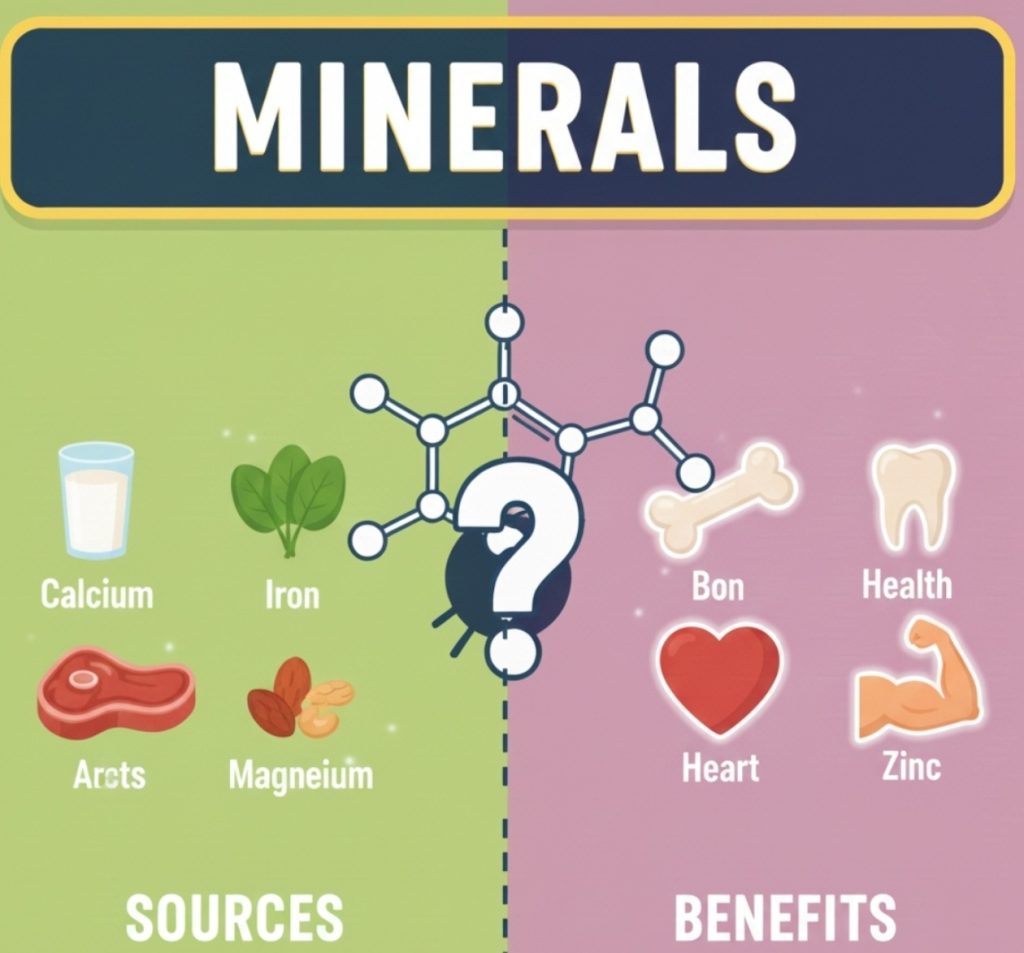
Minerals are inorganic nutrients that your body needs in small amounts to function properly. Unlike vitamins, minerals don’t get broken down, but they play critical roles in bones, teeth, muscles, nerves, and overall health.
Types of Minerals
Minerals are divided into two main groups:
1. Macro-minerals (needed in larger amounts)
- Calcium: Strong bones and teeth, nerve signaling, muscle contraction. Sources: milk, cheese, yogurt, leafy greens.
- Phosphorus: Bones, teeth, energy production (ATP). Sources: meat, dairy, nuts, seeds.
- Magnesium: Muscle relaxation, nerve function, enzyme activity. Sources: nuts, seeds, whole grains, spinach.
- Potassium: Fluid balance, nerve signals, heart health. Sources: bananas, potatoes, beans, avocados.
- Sodium: Fluid balance, nerve and muscle function. Sources: table salt, processed foods (but don’t overdo it).
- Chloride: Helps maintain fluid balance and digestion. Sources: table salt, seaweed.
- Sulfur: Part of amino acids and proteins. Sources: meat, eggs, garlic, onions.
2. Trace Minerals (needed in tiny amounts)
- Iron: Oxygen transport in blood (hemoglobin). Sources: red meat, beans, spinach.
- Zinc: Immune system, wound healing, enzyme function. Sources: meat, shellfish, seeds.
- Iodine: Thyroid hormone production. Sources: iodized salt, seaweed, dairy.
- Selenium: Antioxidant, thyroid function. Sources: nuts (especially Brazil nuts), fish, eggs.
- Copper: Iron metabolism, red blood cells, antioxidant. Sources: nuts, seeds, shellfish.
- Manganese: Bone health, metabolism. Sources: whole grains, nuts, leafy greens.
- Chromium: Blood sugar regulation. Sources: meat, whole grains, broccoli.
- Fluoride: Bone and teeth strength. Sources: fluoridated water, tea.
Why Minerals Matter
- Strong bones & teeth: Calcium, phosphorus, magnesium, fluoride.
- Muscle & nerve function: Sodium, potassium, calcium, magnesium.
- Energy production & metabolism: Iron, copper, magnesium, manganese.
- Immune system support: Zinc, selenium, iron.
- Thyroid function: Iodine, selenium.
How to Get Enough Minerals
- Eat a balanced diet with fruits, vegetables, whole grains, dairy, and lean protein.
- Use iodized salt to meet iodine needs.
- Nuts, seeds, and legumes are great for magnesium, zinc, and copper.
- Avoid relying too much on highly processed foods, which are often low in minerals.
Fun Mineral Facts
- Your body is literally made of minerals — calcium alone makes up about 1–2% of body weight.
- Trace minerals are needed in tiny amounts, but deficiencies can have big effects.
- Minerals often work together — e.g., vitamin D helps your body absorb calcium.
Takeaway
Minerals may be small, but they’re critical for almost every process in your body. From strong bones to a healthy heart, proper mineral intake keeps your body running like a well-oiled machine. Eat a varied diet, and your body will get the essential minerals it needs.