
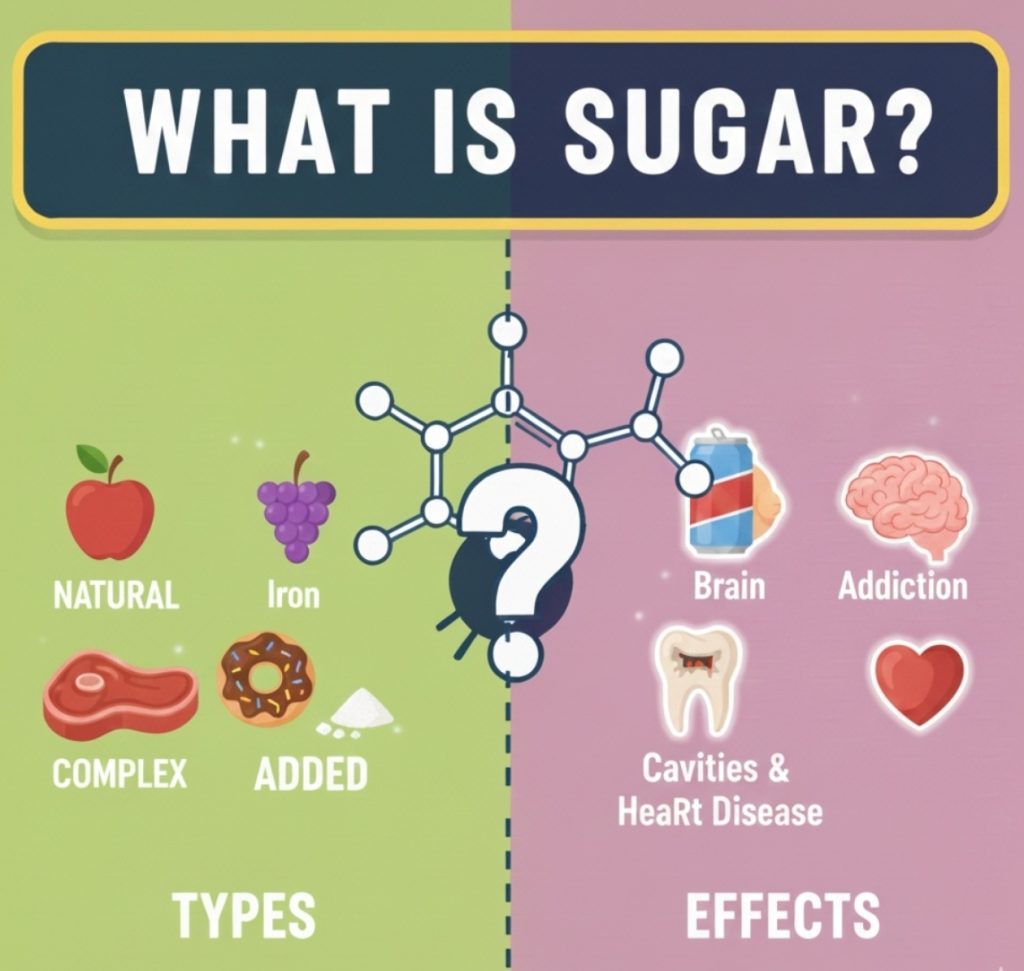
Sugar is sweet, addictive, and everywhere — in sodas, snacks, sauces, and even foods you think are “healthy.” But not all sugars are created equal, and artificial sweeteners add another layer of complexity. Let’s dive in.
What is Sugar?
Sugar is a type of carbohydrate your body uses for energy. When you eat sugar, your body breaks it down into glucose, which fuels your brain, muscles, and organs.
But here’s the catch: too much sugar can be harmful, especially when it comes from processed foods rather than fruits or natural sources.
Natural Sugars vs. Added Sugars
Natural Sugars
Found naturally in foods:
- Fruits: fructose
- Milk: lactose
- Vegetables: small amounts of glucose and fructose
Pros:
- Come with fiber, vitamins, and minerals
- Slow digestion → steady energy, no sugar spikes
Added Sugars
Added to foods during processing or cooking:
- Soda, candy, pastries, sweetened cereals
- Table sugar, honey, syrups (even some natural ones in excess)
Cons:
- Rapid glucose spikes → insulin surges → energy crashes
- Can increase risk of obesity, type 2 diabetes, and heart disease
- Often “empty calories” with no nutrients
Artificial Sweeteners
Artificial or non-nutritive sweeteners give sweetness without the calories. Examples:
- Aspartame
- Sucralose
- Saccharin
- Stevia (plant-based but extremely concentrated)
Pros:
- Low-calorie alternative for weight management
- May help reduce sugar intake
Cons / Controversies:
- Some studies suggest they can alter gut microbiome
- May increase cravings for sweet foods
- Overconsumption can sometimes affect insulin sensitivity
How Sugar Affects Health & Metabolism
- Blood Sugar & Insulin: Rapid sugar intake spikes blood sugar → insulin releases → fat storage if excess calories.
- Energy Levels: Quick spike → short-lived energy → crash → fatigue and cravings.
- Brain Reward System: Sugar activates dopamine pathways → can be mildly addictive.
- Inflammation & Aging: Excess sugar may increase inflammation and oxidative stress, contributing to aging and chronic diseases.
Smart Sugar Strategies
- Prioritize whole fruits for natural sweetness.
- Limit added sugars: read labels on processed foods.
- Use moderate amounts of natural sweeteners like honey or maple syrup.
- If using artificial sweeteners, don’t rely on them entirely — balance with a mostly whole-food diet.
- Pair sugars with fiber, protein, or healthy fats to slow digestion and reduce spikes.
Fun Fact
- The average person consumes 70–80 grams of added sugar per day, way above the WHO recommendation of <25 grams/day for optimal health.
Takeaway
Sugar isn’t evil — your body needs glucose for energy. But the type, amount, and context matter. Natural sugars in whole foods are generally healthy, while excess added sugars or over-reliance on artificial sweeteners can mess with metabolism, energy, and overall health. Balance and awareness are key.