
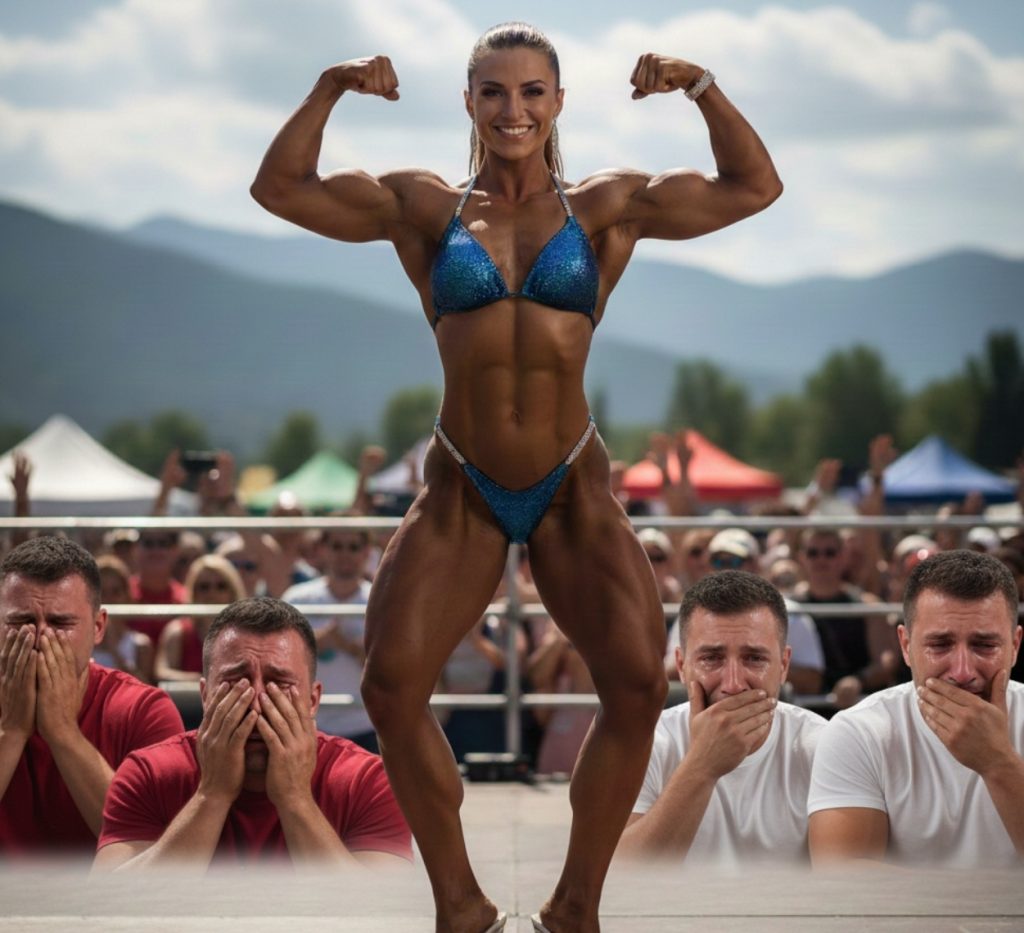
Physical strength in women can trigger discomfort in some men because it conflicts with evolved role-expectations, socialized gender scripts, and fragile masculinity. But plenty of men prefer strong women — attraction is filtered through personality, security, and culture. Strength doesn’t repel people so much as it reveals who they are.
1. Evolutionary psychology: old wiring, modern life
Humans evolved in environments where sexual roles had practical divisions: men more often did physical defense and long-range hunting, women more often handled childbearing and caregiving. Over thousands of generations, mate preferences adapted to cues of fertility and parental investment.
That can leave behind subtle biases: traits signaling high fertility and need for protection (youthful appearance, softness, lower threat) tended to be attractive. A woman who looks physically strong may — at a rapid, subconscious level — send conflicting signals: independence, lower need for protection, or even competitiveness.
Important: this is a background tendency, not a rule. Evolutionary accounts explain potentials for preference, not prescriptions.
2. Masculinity threat theory: ego protection in action
Many men are taught—by family, media, peers—that masculinity equals strength, competence, and dominance. When a woman displays traits that overlap with that cultural map (muscularity, assertiveness, dominance), some men experience a threat to their masculine identity.
Psychologically that plays out as:
- avoidance or distancing
- humor/sarcasm to deflate the threat (“too manly”)
- overt derision or gatekeeping of gender roles
This is not about hating strong women. It’s about protecting fragile self-concepts: if your sense of worth is built on being the stronger one, someone who contradicts that can feel destabilizing.
3. Gender schema and cultural scripts
From toddlerhood we build internal templates — schemas — for what is “masculine” and “feminine.” These templates map certain traits to gender (soft = feminine, big = masculine). When someone violates the script, our brains flag it as “unexpected.”
Because attraction often rides familiarity, an unexpected configuration (a woman who’s visibly strong) can be less comfortable for people whose preferences were shaped by those scripts.
Schemas are learned, so they can be unlearned.
4. Sexual dimorphism expectations and social signaling
In most cultures, male bodies are on average bigger and stronger. Many social norms assume man > woman in size/strength. Why does this matter? Attraction includes not only the person but also the imagined social image of the pair.
Some men worry about how they’ll be perceived with a stronger partner (“Will people think I’m weak?”). That worry is social signaling — we care about status, reputation, and how our relationships are read by others.
So resistance to strong partners can be about external social perception as much as internal preference.
5. The big reality check: preference ≠ universal truth
Not all men dislike strong women. In fact:
- men with secure self-esteem often find strength attractive
- people who value equality are more likely to prefer capable partners
- cultural shifts (fitness culture, women’s sport visibility) have widened the attractiveness spectrum
So strength acts like a filter. It’s a way to separate partners who fit traditionalized expectations from those who embrace more egalitarian dynamics.
6. Cognitive shortcuts and stereotyping
Brains use heuristics — quick, rough rules — to make social judgments under time pressure. Physical strength can be mis-mapped by a heuristic to: aggression, dominance, low nurturing.
Those shortcuts ignore nuance: muscular people can be tender, nurturing, and emotionally available. The heuristic is lazy but common, and culture often enforces it with jokes and labels.
7. Intersection with other factors
The reaction to strong women depends a lot on context:
- Age: younger generations are more flexible with gendered expectations.
- Subculture: gym/athlete communities value strength; traditionalist communities may not.
- Individual history: personal experiences, attachment style, and parental modeling shape attraction.
This is why variability is huge across individuals and cultures.
8. Why many men do like strong women
Don’t let the title fool you — many men are attracted to strength because it signals:
- discipline and mastery (fitness takes work)
- health and vitality
- confidence and independence
Attraction is complex. Secure men often see a partner’s strength as complimentary, not competitive.
9. Practical takeaways (for anyone reading)
If you’re a strong woman wondering why some guys recoil:
- This often says more about the guy’s insecurity than about you.
- Strength filters partners who’re comfortable with equality — that’s useful.
- You can look for men who value competence and mutual respect.
If you’re a man feeling uncomfortable:
- Ask whether the discomfort is about social image or inner insecurity.
- Working on self-worth outside of comparisons helps — therapy, honest talk, or self-reflection go a long way.
If you’re dating and both of you care:
- Communicate expectations about roles and public image early.
- Practice perspective-taking: notice when a reaction comes from stereotype rather than reality.
10. Final note: attraction evolves
Preferences aren’t fixed. Cultural change (more women in sport, more flexible masculinity models) shifts what people find attractive. What feels odd in one generation can be normal in the next.
So if you’re strong — exist proudly. If you’re uneasy — question where the unease comes from.