Before We Begin: What Psychology Actually Is
Before moving forward, one thing must be clear.
If you don’t understand what psychology truly is, everything that comes after will feel confusing or shallow.
Psychology: Understanding the Mind, Behavior, and Life
Have you ever wondered why people do what they do?
Why you make certain choices, feel specific emotions, or react in ways you later question?
This is where psychology begins.
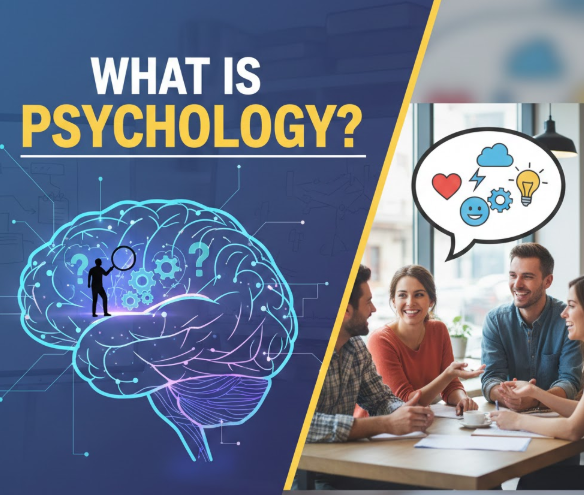
At its core, psychology is the scientific study of the human mind and behavior. It explores how we think, feel, decide, and act—and why we do so in different situations.
Psychology does not rely on assumptions or opinions. It studies human behavior systematically, using evidence and observation.
Where the Word “Psychology” Comes From
The word psychology comes from ancient Greek and is made of two parts:
Psyche — meaning mind or soul
Logos — meaning study or knowledge
So, in its most literal sense, psychology means the study of the mind.
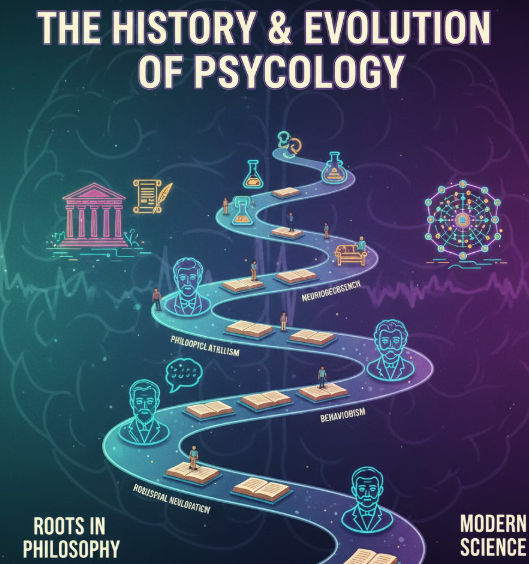
Originally, psychology was part of philosophy. Over time, as methods became more rigorous and measurable, it evolved into a scientific discipline focused on mental processes and behavior.
The Major Areas of Psychology
Psychology is a broad field, but most of its work falls into a few core areas:
Cognitive Psychology – How we think, learn, remember, focus, and solve problems
Behavioral Psychology – How habits form and how behavior is shaped through reinforcement and punishment
Social Psychology – How people influence each other, conform to groups, and behave in social settings
Clinical Psychology – Understanding, diagnosing, and treating mental health conditions
Developmental Psychology – How humans grow, mature, and change throughout life
These areas together create a complete picture of human behavior.
Why Psychology Matters in Everyday Life
You don’t need a degree in psychology to benefit from it.
Understanding psychology helps you:
Read people more accurately
Understand your own emotions instead of being controlled by them
Respond thoughtfully instead of reacting impulsively
Communicate clearly and effectively
Build good habits and break destructive ones
In short, psychology improves judgment—about yourself and others.
What Makes Psychology a Science
Psychology is not guesswork or intuition. It follows scientific principles.
Some of the key methods include:
Observation – carefully watching behavior in real settings
Experimentation – testing ideas under controlled conditions
Data Analysis – identifying patterns using statistics
Replication – repeating studies to confirm results
These methods separate psychology from opinion and speculation.
Levels of Analysis in Psychology
Human behavior cannot be explained from just one angle. Psychology studies it at multiple levels:
1. Biological Level
Brain structures
Neural activity
Neurotransmitters
Hormones
2. Cognitive Level
Attention
Memory
Language
Decision-making
Problem-solving
3. Behavioral Level
Learning through experience
Reinforcement and punishment
Habit formation
4. Social & Environmental Level
Culture
Social norms
Group behavior
Authority and conformity
Each level adds depth to understanding human behavior.
Core Scientific Subfields
Some branches go especially deep into research and application:
Cognitive Psychology
Behavioral Psychology
Neuroscience
Developmental Psychology
Social Psychology
Clinical Psychology
These fields form the backbone of modern psychological science.
Closing Thought
Psychology is essentially a toolkit for understanding life. It helps you make sense of yourself, others, and the invisible forces shaping everyday behavior.
With this foundation clear, you are now ready to move forward—step by step—through the psychology learning roadmap.