
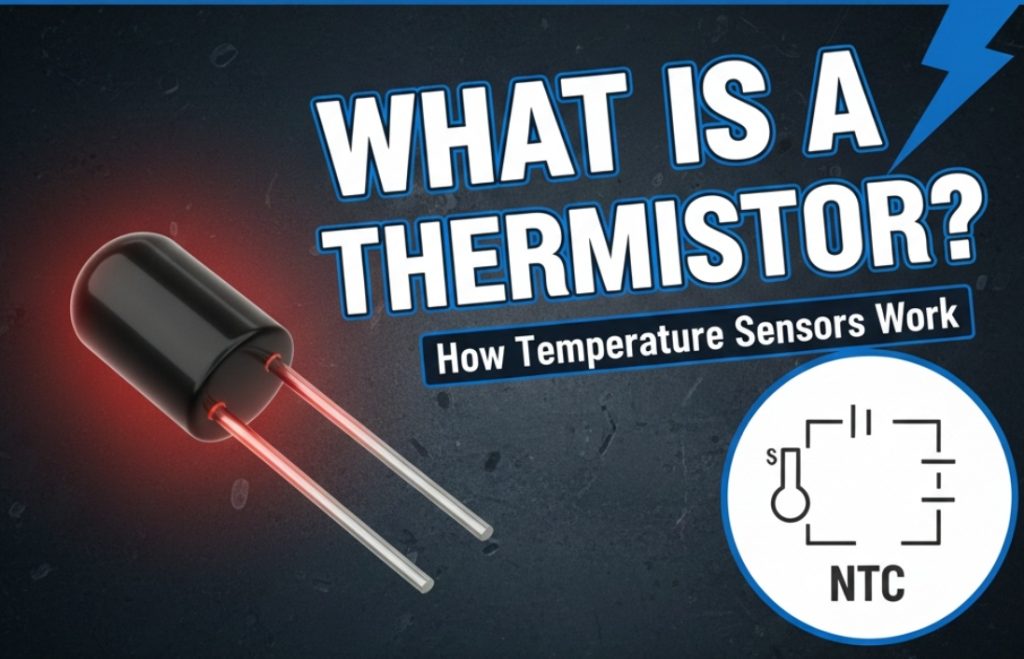
When it comes to electronics, temperature control is everything. From your smartphone battery to car engines, overheating can cause serious damage. That’s where thermistors come in—the quiet heroes that measure, monitor, and protect.
What is a Thermistor?
A thermistor is a type of resistor whose resistance changes with temperature. The name itself comes from “thermal” + “resistor”, because that’s exactly what it does: it resists electricity differently depending on heat.
By measuring the resistance, electronics can figure out the temperature and respond accordingly—like slowing down a CPU or shutting off a heater.
Types of Thermistors
Thermistors are mainly classified based on how resistance changes with temperature:
1. NTC Thermistor (Negative Temperature Coefficient)
- Resistance decreases as temperature increases.
- Applications: temperature sensors in thermometers, battery packs, and circuits.
- Easy way to remember: Hot → less resistance (like butter melting).
2. PTC Thermistor (Positive Temperature Coefficient)
- Resistance increases as temperature rises.
- Applications: overcurrent protection, self-regulating heating elements.
- Fun memory trick: Hot → more resistance (like traffic piling up on a hot road).
Other Forms
- Glass-Encapsulated Thermistors: NTC or PTC type, encased in glass for durability, moisture, and corrosion resistance.
- Bead Thermistors: Tiny beads, mostly NTC, fast-response sensors for medical devices or electronics.
- Chip/Surface-Mount Thermistors: Flat, tiny thermistors for mounting directly on circuit boards, used in smartphones, laptops, and IoT devices.
What Are Thermistors Made Of?
Thermistors are made from materials that react to temperature:
- Ceramic (Metal Oxides): Manganese, nickel, cobalt, or copper oxides pressed and fired into a solid form (mostly NTC).
- Polymer: Conductive polymer mixed with carbon or other fillers, often for PTC thermistors.
- Glass-Encapsulated: Protects the thermistor from moisture, corrosion, and heat.
- Beads or Chips: Small forms of the same materials for quick response and compact electronics.
Where Are Thermistors Used?
Thermistors are literally everywhere:
1. Temperature Measurement
- Digital thermometers, industrial sensors, and weather instruments.
2. Temperature Control
- HVAC systems, refrigerators, ovens, and water heaters.
3. Electrical Protection
- Overcurrent protection in circuits, surge protection, and battery safety.
4. Consumer Electronics
- Smartphones, laptops, gaming consoles, and smart devices monitor battery and CPU temperature.
5. Automotive Applications
- Engine coolant sensors, transmission sensors, and climate control systems.
Why Thermistors Are Important
- High Sensitivity: Detect small temperature changes.
- Compact & Affordable: Small size, easy to integrate, cost-effective.
- Fast Response: Quickly reacts to temperature shifts.
- Durable: Especially glass-encapsulated thermistors.
Limitations:
- Non-linear response can complicate calculations.
- Limited temperature range compared to other sensors.
- Can be fragile under mechanical stress.
Conclusion
Thermistors might be tiny and overlooked, but they play a huge role in keeping electronics safe and efficient. From your smartphone battery to industrial machines, these temperature-sensitive resistors quietly prevent overheating disasters.
So, next time your phone doesn’t explode while gaming or your fridge keeps food perfectly chilled, give a silent nod to the humble thermistor—technology’s unsung hero.