All Knowledge

screenshot 20251231 023453

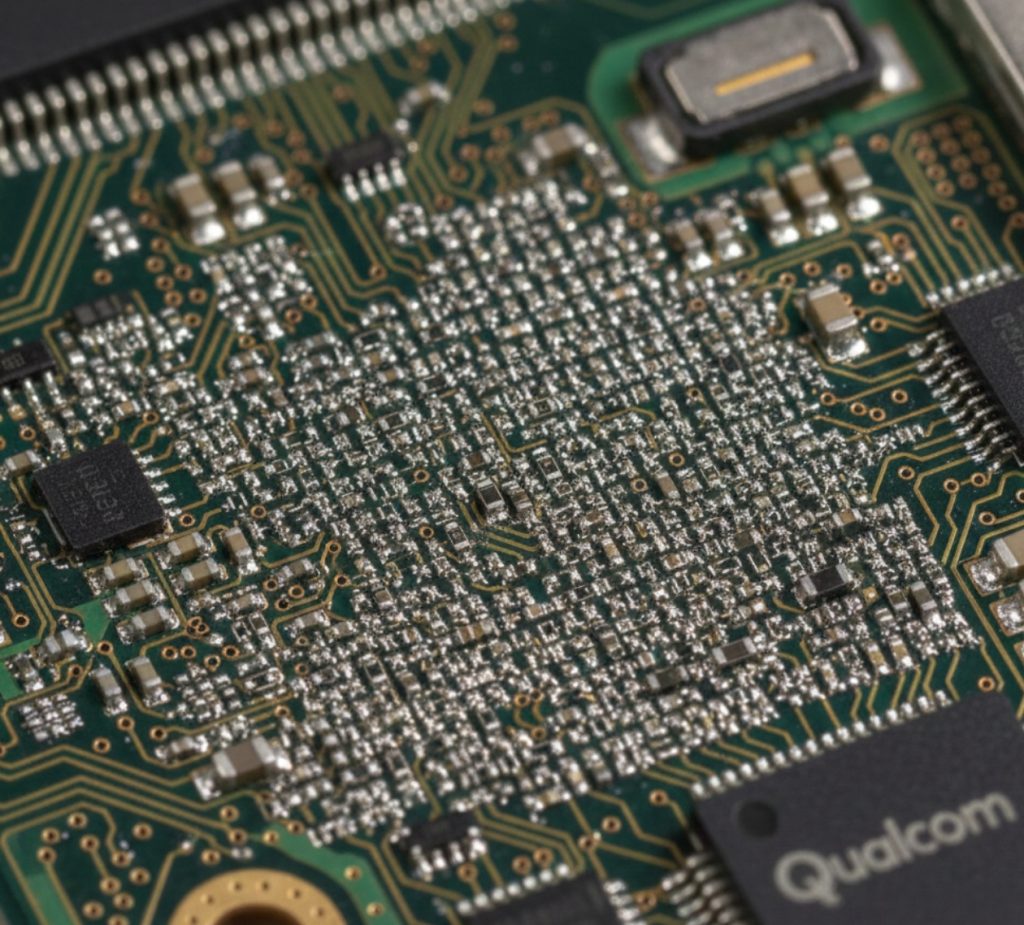
Transistors: The Building Blocks of Modern Electronics

A transistor is a semiconductor device that can amplify signals or act as a switch in electronic circuits. It’s one of the most important components in electronics, powering everything from smartphones to computers. — Key Features of a Transistor Terminals: 3 — Collector (C), Base (B), Emitter (E) Polarity: Depends on type (NPN or PNP) […]

Transistors: The Building Blocks of Modern Electronics Read More »
screenshot 20251231 022152

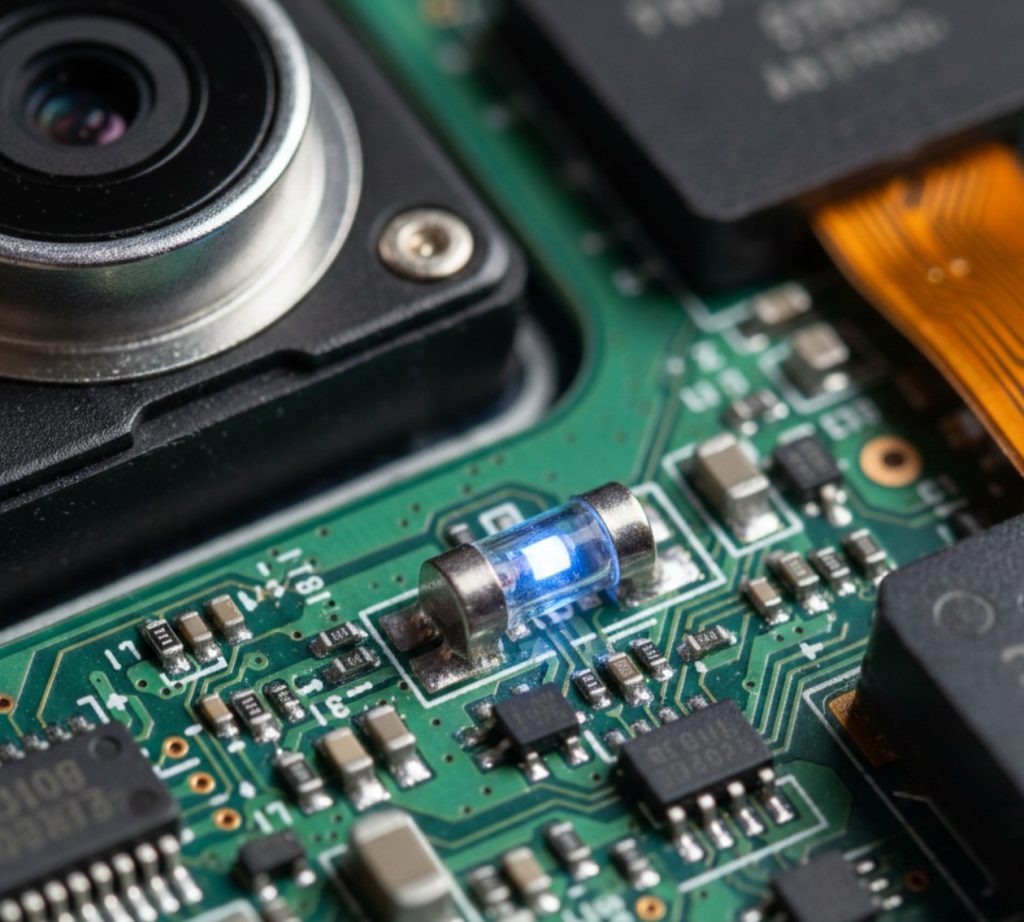
Resistors: Controlling Current in Electronics

A resistor is a fundamental electronic component that limits current or reduces voltage in a circuit. Think of it as a traffic controller for electrons, preventing damage to sensitive components by regulating how much current flows. Key Features of a Resistor Types of Resistors 1. Fixed Resistor 2. Variable Resistor Specialized Types of Resistors How

Resistors: Controlling Current in Electronics Read More »

screenshot 20251231 021820

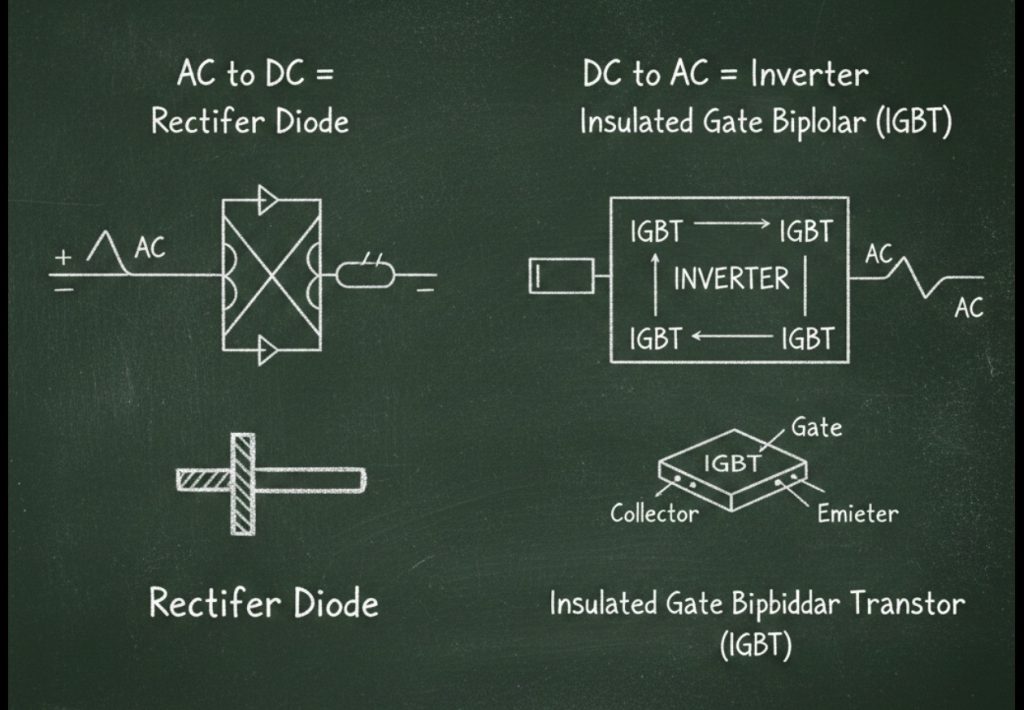
AC to DC & DC to AC: How Power Conversion Works

Electricity doesn’t always come in the form we need. Devices require different types of current: Converting between these two forms is essential in electronics, and that’s where rectifiers and inverters come in. AC to DC: Rectifier A rectifier converts alternating current (AC) into direct current (DC). Types of Rectifiers Applications: DC to AC: Inverter An

AC to DC & DC to AC: How Power Conversion Works Read More »

istockphoto 2076459469 612x612

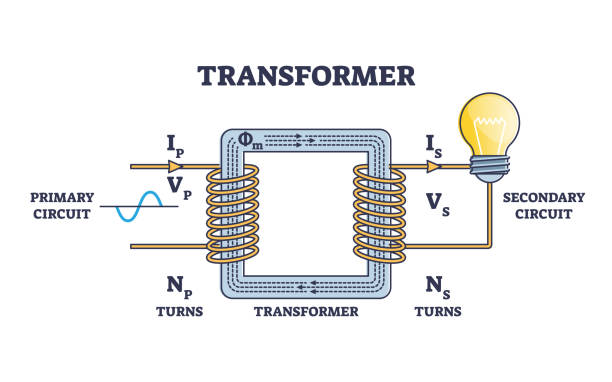
Transformer: The Power Converter of Electronics

Transformers are essential devices in electrical and electronic systems. They make it possible to change voltage levels safely, enabling electricity to travel efficiently from power plants to our homes and devices. What is a Transformer? A transformer is an electrical device that transfers electrical energy between two or more circuits through electromagnetic induction. It can

Transformer: The Power Converter of Electronics Read More »

screenshot 20251231 015914

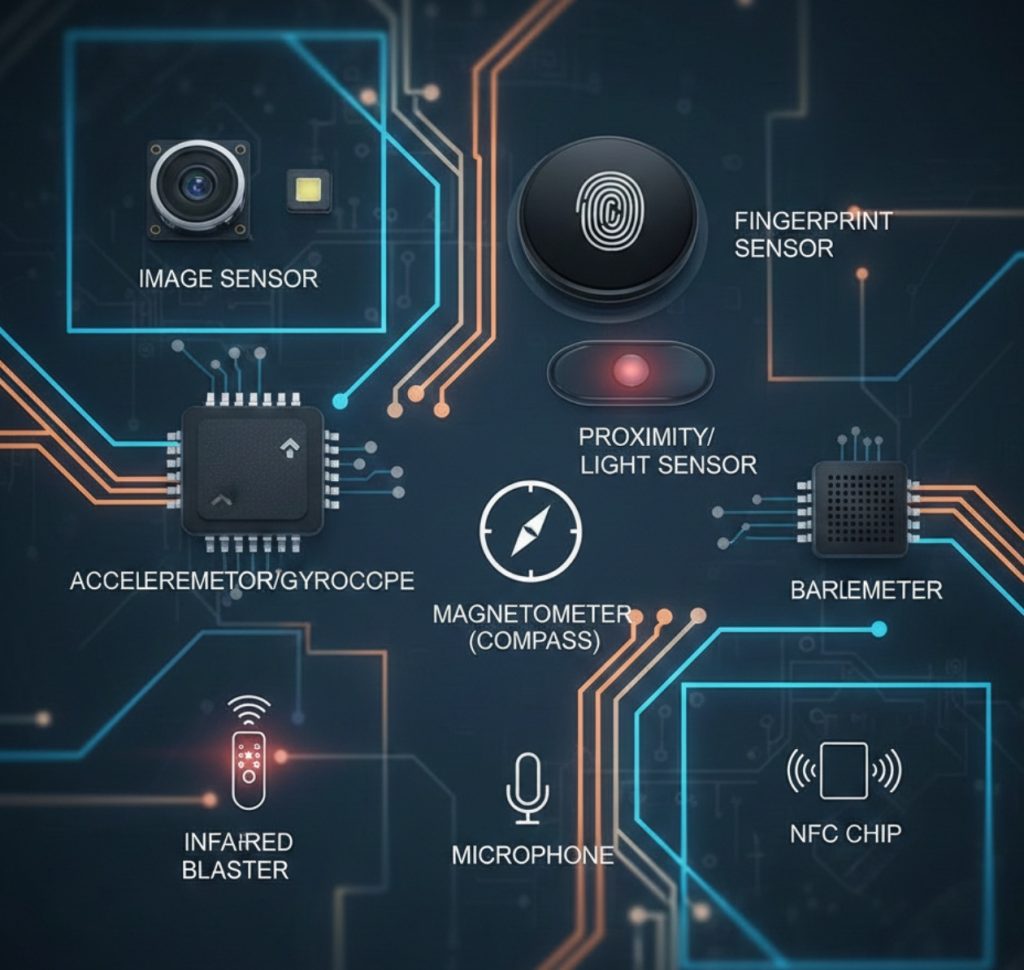
Types of Sensors in Modern Devices

Sensors are the eyes, ears, and balance system of electronics. They detect physical or environmental changes and convert them into signals your device can understand. Common Sensors 1. Face ID / Facial Recognition Sensor Uses infrared, 3D mapping, or cameras to detect your face. Provides secure unlocking and authentication. 2. Fingerprint Sensor Detects unique fingerprint

Types of Sensors in Modern Devices Read More »

screenshot 20251231 015034

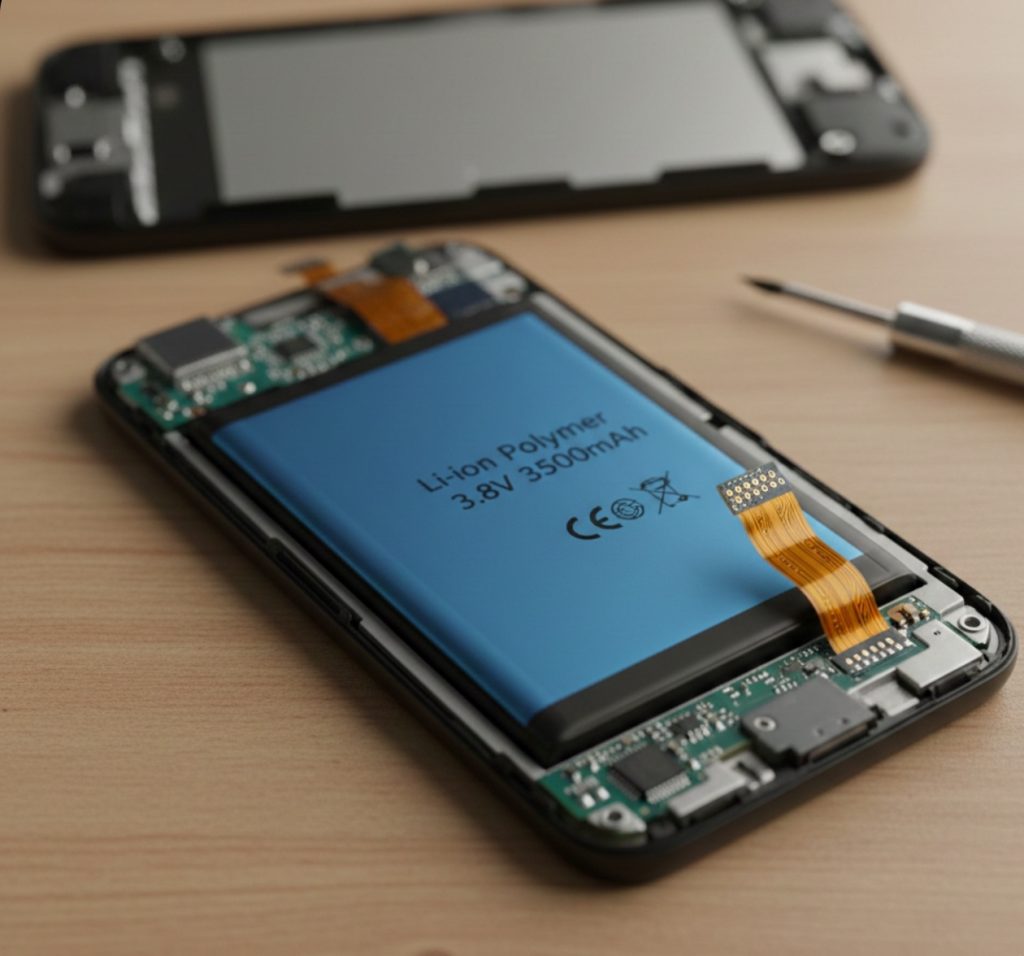
Phone Batteries: Powering Your Pocket Computer

Your smartphone is basically a pocket-sized computer, and none of its apps, calls, or games would work without a battery. Phone batteries are specially designed to be lightweight, rechargeable, and powerful, giving you hours of usage in a tiny package. What is a Phone Battery? A phone battery is a rechargeable energy source that powers

Phone Batteries: Powering Your Pocket Computer Read More »

screenshot 20251231 014655

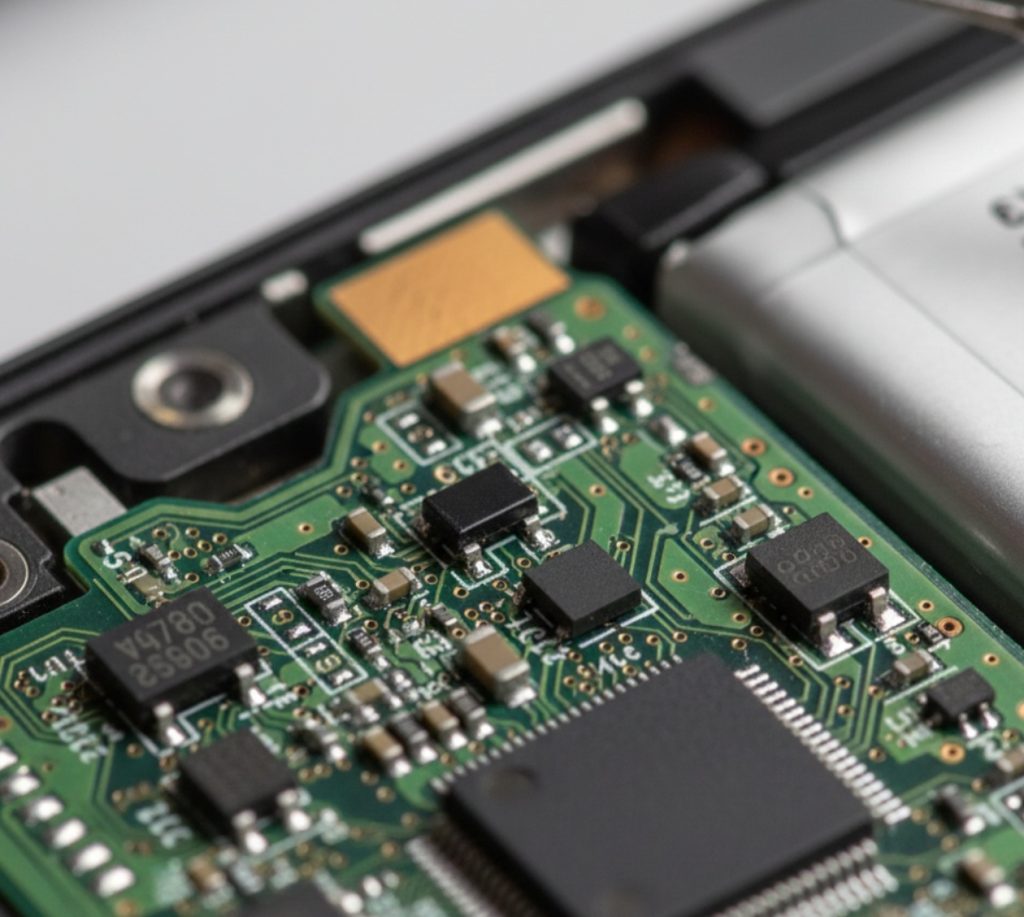
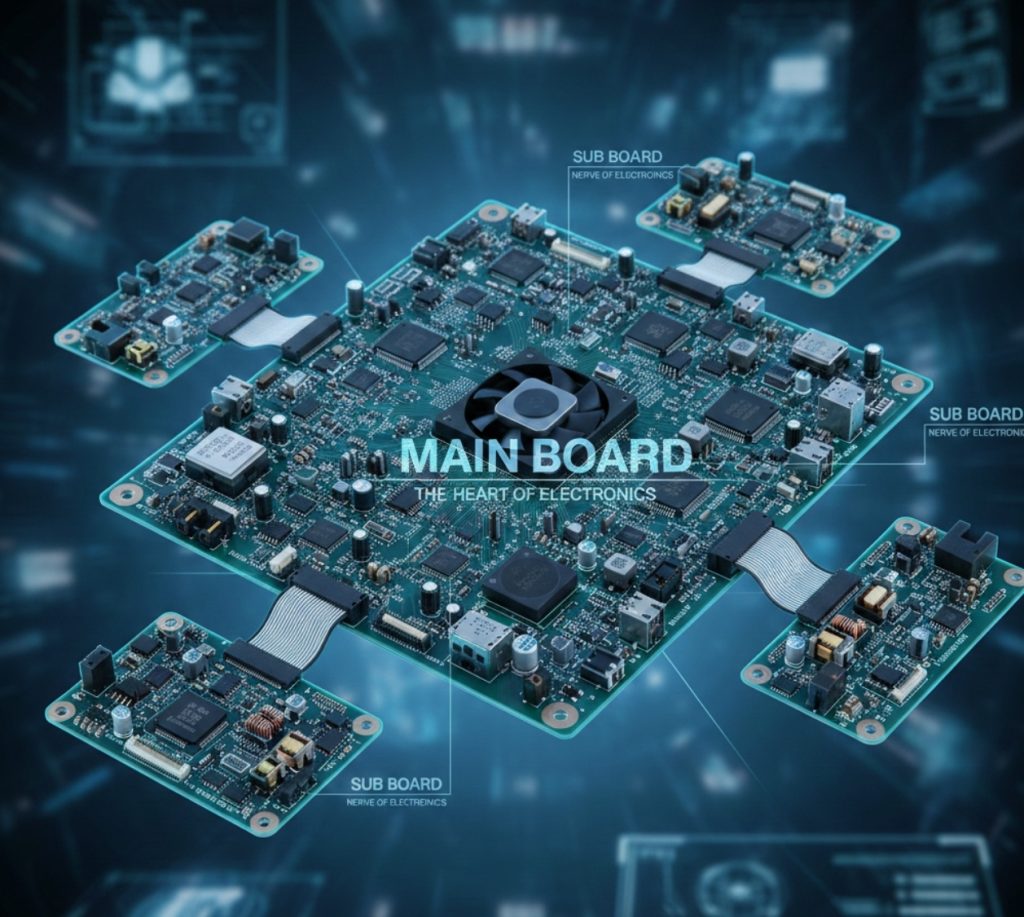
Main Boards & Sub Boards: The Heart and Nerve of Electronics

In every modern electronic device—smartphones, laptops, tablets, or IoT gadgets—there’s a hidden infrastructure that keeps everything running smoothly. These are the main board (motherboard) and the sub board (daughterboard). Understanding them helps you see how devices handle processing, connectivity, power, and audio. What is a Main Board (Motherboard)? The main board, also called the motherboard,

Main Boards & Sub Boards: The Heart and Nerve of Electronics Read More »