
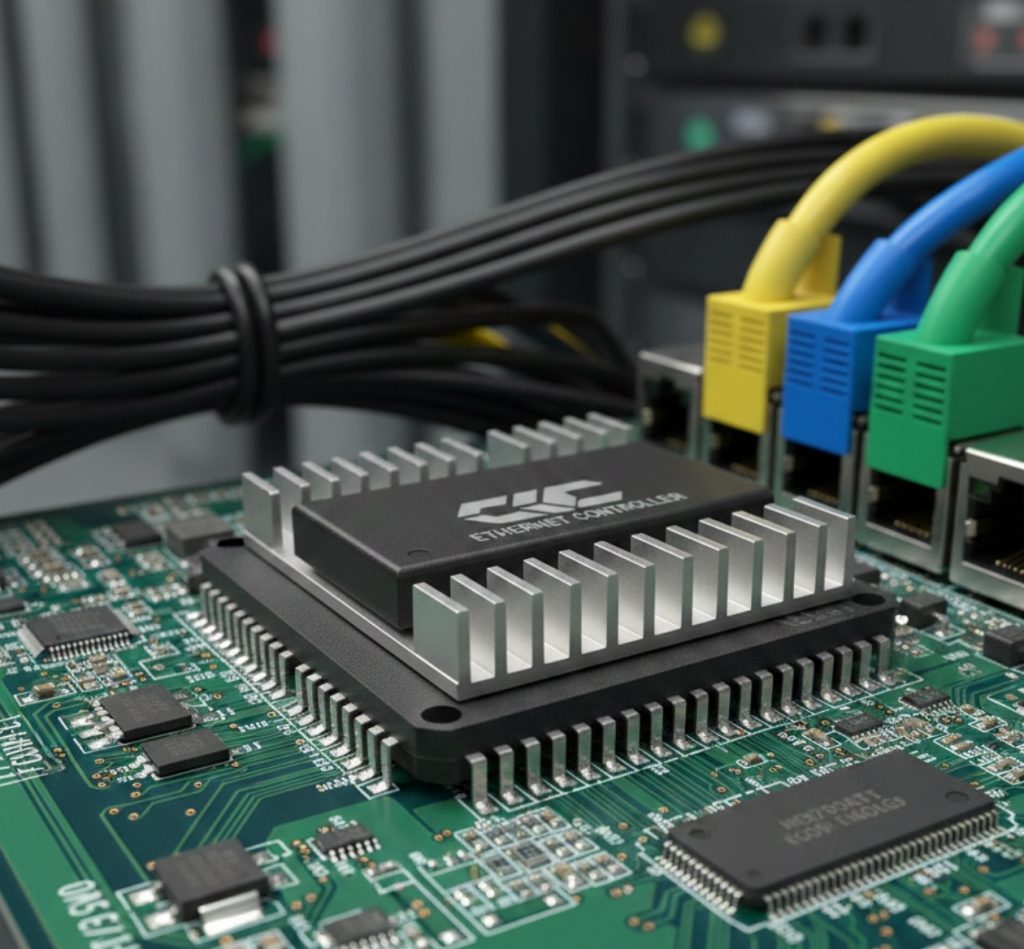
A Network IC is an integrated circuit responsible for managing communication and data transfer between devices. It handles tasks like Ethernet, Wi-Fi, Bluetooth, and cellular network communication, making it essential for modern electronics.
What is a Network IC?
- A Network IC is a specialized chip that enables devices to connect, send, and receive data.
- Handles signal processing, protocol management, and data transmission.
- Found in smartphones, computers, routers, IoT devices, and embedded systems.
Other Names:
- Network Processor
- Communication IC
- Ethernet IC
- Wi-Fi IC
- LAN IC
How Network IC Works
- Signal Reception: Receives data from network sources (Ethernet, Wi-Fi, Bluetooth, or cellular).
- Processing & Protocol Handling:
- Manages communication protocols like TCP/IP, UDP, or 5G LTE.
- Converts data into a format usable by the device.
- Data Transmission: Sends processed data to the CPU, memory, or other peripherals.
- Error Handling & Security: Ensures data integrity and encryption.
Think of a Network IC as the translator and traffic manager between your device and the network.
Types of Network ICs
1. Ethernet IC
- Handles wired network communication.
- Used in computers, switches, routers, and servers.
2. Wi-Fi / Wireless IC
- Manages wireless connectivity.
- Found in smartphones, laptops, and IoT devices.
3. Bluetooth IC
- Supports short-range wireless communication.
- Common in headphones, smartwatches, and wireless peripherals.
4. Cellular Modem IC
- Handles mobile network communication (2G, 3G, 4G, 5G).
- Found in smartphones, tablets, and LTE routers.
5. PoE (Power over Ethernet) IC
- Provides data and power simultaneously over Ethernet cables.
- Used in IP cameras, VoIP phones, and network devices.
Applications of Network ICs
- Smartphones & Tablets: Wi-Fi, Bluetooth, 4G/5G connectivity.
- Computers & Laptops: Ethernet and Wi-Fi communication.
- Routers & Switches: Data routing and network management.
- IoT Devices: Connectivity for smart homes, industrial sensors, and wearable devices.
- Automobiles: Connected car systems, GPS, and infotainment.
Key Features
- Protocol Support: TCP/IP, UDP, LTE, 5G, Wi-Fi standards.
- High-Speed Data Transfer: Ensures fast communication.
- Integrated Security: Encryption and error-checking features.
- Low Power Consumption: Important for mobile and IoT devices.
Fun Facts
- Network ICs are at the core of smart home devices, enabling devices to talk to each other.
- Some modern smartphones integrate Wi-Fi, Bluetooth, and cellular modems in a single Network IC.
- Network ICs are designed for both high-speed wired and wireless communication, making them versatile.
Quick Reference
| Type | Feature | Common Use Case |
|---|---|---|
| Ethernet IC | Wired network communication | Computers, routers, switches |
| Wi-Fi / Wireless IC | Wireless connectivity | Smartphones, laptops, IoT |
| Bluetooth IC | Short-range wireless | Headphones, smartwatches |
| Cellular Modem IC | Mobile network communication | Smartphones, LTE routers |
| PoE IC | Power + data over Ethernet | IP cameras, VoIP phones |