
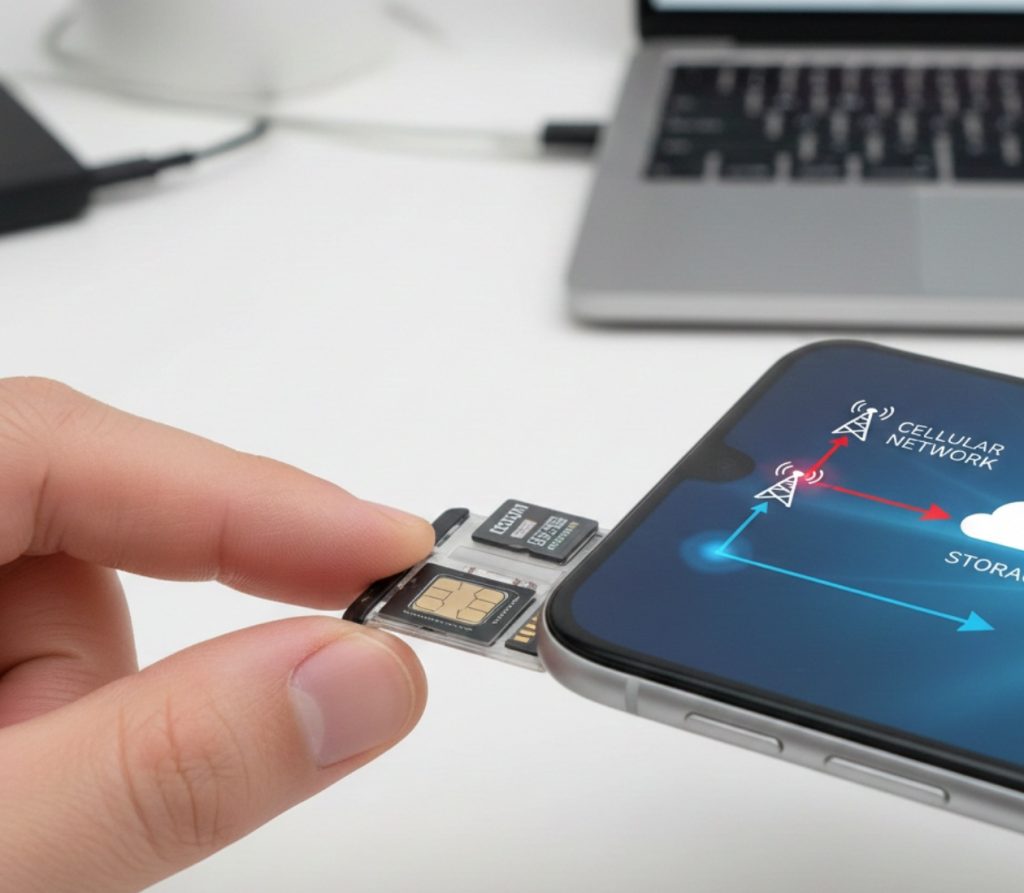
Your smartphone is more than a device; it’s a gateway to the mobile network, connecting you to the world via your SIM carrier. Mobile networks have evolved from 2G to 5G, improving speed, capacity, and connectivity every step of the way.
What is a SIM Carrier?
A SIM carrier (or mobile network operator) is a company that provides cellular services to your phone via a SIM card. The SIM card stores your subscriber identity, allowing the carrier to:
- Authenticate your phone on the network
- Enable calls, SMS, and mobile data
- Track your usage and manage billing
Example carriers: Verizon, AT&T, Vodafone, Grameenphone (Bangladesh), etc.
Mobile Network Generations
Mobile networks are classified into generations (G), each representing a significant leap in technology and performance.
1. 2G (Second Generation)
- Architecture: Circuit-switched
- Speed: Up to 64 Kbps
- Capacity: Supports basic voice calls and SMS
- Bandwidth: Narrow, limited data capability
- IP Protocol: None (mainly voice-focused)
2G was revolutionary for SMS and basic mobile data.
2. 3G (Third Generation)
- Architecture: Packet-switched + circuit-switched hybrid
- Speed: 384 Kbps to a few Mbps
- Capacity: Supports voice, SMS, and internet browsing
- Bandwidth: Medium, supports mobile web and video calls
- IP Protocol: Introduced IP-based services for mobile internet
3G brought smartphones online with internet browsing, emails, and video calls.
3. 4G (Fourth Generation / LTE)
- Architecture: Fully IP-based packet-switched network
- Speed: 10–100 Mbps (theoretical up to 1 Gbps)
- Capacity: Supports HD streaming, gaming, VoLTE, and apps
- Bandwidth: Wide bandwidth for high-speed data
- IP Protocol: Fully IP-based, optimized for internet services
4G enabled modern apps, HD video streaming, and cloud services.
4. 5G (Fifth Generation)
- Architecture: Cloud-native, software-defined, low-latency architecture
- Speed: 100 Mbps – 10 Gbps (ultra-fast)
- Capacity: Supports IoT, smart cities, AR/VR, massive device connections
- Bandwidth: Very wide, uses higher frequency bands (mmWave)
- IP Protocol: Fully IP-based, supports edge computing and network slicing
5G is designed for ultra-fast data, low latency, and massive device connectivity, powering the next generation of smart technology.
Key Differences Among Generations
| Feature | 2G | 3G | 4G | 5G |
|---|---|---|---|---|
| Capacity | Low | Medium | High | Ultra-High |
| Architecture | Circuit-switched | Hybrid | IP-based | Cloud-native / SDN |
| Speed | 64 Kbps | 384 Kbps–a few Mbps | 10–100 Mbps | 100 Mbps–10 Gbps |
| Bandwidth | Narrow | Medium | Wide | Very Wide |
| IP Protocol | None | Partial | Full IP | Full IP + Network Slicing |
Fun Facts
- 2G networks are still active in some countries for legacy devices and IoT.
- 4G LTE networks are the most widely used globally today.
- 5G can theoretically connect millions of devices per square kilometer—perfect for smart cities.
- Each generation not only increases speed but also reduces latency and improves network efficiency.
Final Thoughts
Understanding SIM carriers and network generations helps you appreciate how mobile technology has evolved. From 2G SMS to 5G ultra-fast connectivity, each generation has enabled new possibilities for communication, business, and entertainment.
Do you want me to do that?